
At first glance, the de Havilland Canada DHC-2 Beaver and the Avro Canada CF-105 Arrow have very little in common.
One is a rugged bush plane designed to carry people and supplies into some of the most isolated regions of the country. The other is a supersonic interceptor conceived at the height of the Cold War to defend North American airspace.
One cruises at around 200 km/h. The other was intended to fly beyond Mach 2.
Yet together, they tell the same story remarkably well: that of a Canadian aviation industry capable of designing aircraft around its own needs, then building machines that would leave a lasting mark on aviation history.
The DHC-2 Beaver: Building the Aircraft Canada Needed
When de Havilland Canada began developing the Beaver after the Second World War, the goal was not to set records.
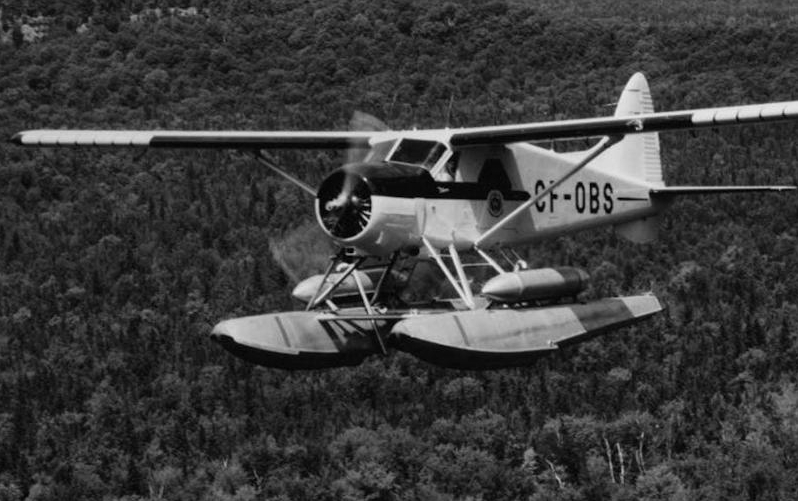
The goal was to build a genuine working aircraft.
Across Canada’s enormous distances, a bush plane needed to carry a useful load, operate from very short strips, land on lakes, work from snow, and remain dependable far from major centres where maintenance facilities were limited.
The result flew for the first time on August 16, 1947.
The DHC-2 is an all-metal monoplane with excellent short takeoff and landing capability. Depending on its configuration, it can operate on wheels, skis, or floats. It was exceptionally well suited to the kind of flying that shaped much of Canadian aviation: transportation to remote communities, exploration, forestry, mining, hunting, fishing, and resupply work.
Its success quickly extended far beyond Canada.
A total of 1,692 Beavers were built between 1947 and 1968, making it, according to the Canada Aviation and Space Museum, the most-produced aircraft ever designed and built in Canada. The Beaver went on to serve in roughly 60 countries and also had a substantial military career in the United States.
An Engine as Iconic as the Aircraft
At the heart of the Beaver Mk I is an engine that will be especially familiar to anyone interested in aircraft mechanics: the Pratt & Whitney R-985 Wasp Junior.
This nine-cylinder radial produces about 450 hp. Simple, rugged, and proven, it was particularly well suited to an aircraft expected to work far from major infrastructure.
That combination of an airframe designed around operators’ real needs and a dependable powerplant goes a long way toward explaining the Beaver’s exceptional longevity.
Nearly eight decades after its first flight, seeing a Beaver on floats lift off from a Canadian lake is still nothing unusual.
There may be no better definition of a successful design.
The Avro Arrow: A Completely Different Ambition
About a decade later, Canada’s aviation industry took on a radically different problem.
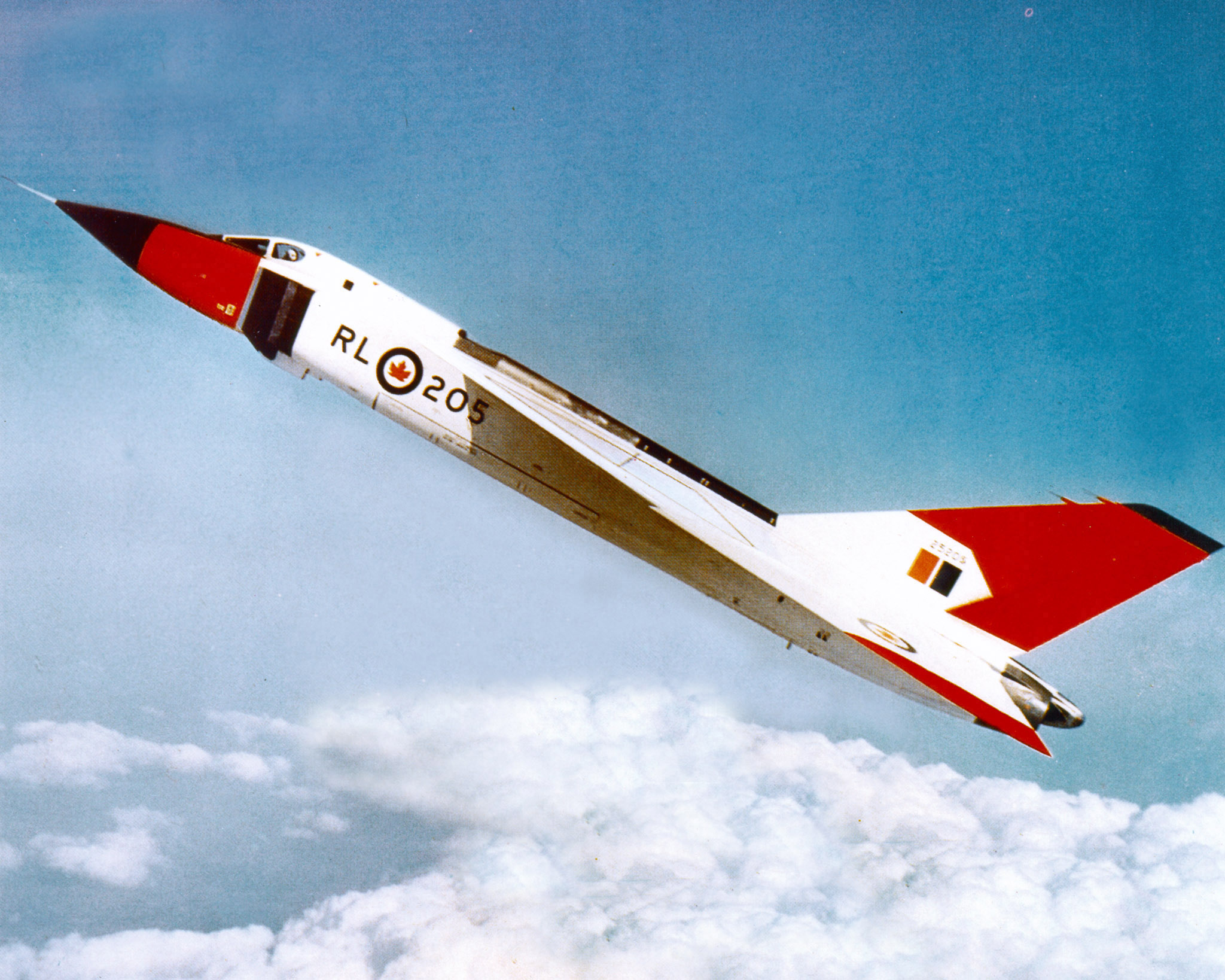
It was the height of the Cold War.
Canada needed the ability to detect and rapidly intercept Soviet bombers that could approach North America over the Arctic. Avro Canada was tasked with developing a successor to the CF-100 Canuck.
That aircraft became the CF-105 Arrow.
Where the Beaver had been designed around simplicity, useful load, and remote operations, the Arrow was meant to push the limits of the technology available at the time.
A large delta wing, two-seat cockpit, interception radar, internal weapons bay, and supersonic performance made it an extraordinarily ambitious project for Canada in the 1950s.
The first Arrow, RL-201, made its inaugural flight on March 25, 1958, with Janusz Żurakowski at the controls. Five aircraft would fly during the test program. The Canada Aviation and Space Museum preserves the largest surviving section of a CF-105 and documents the history of the program.
And Once Again, a Story About Engines
The first Arrows flew with Pratt & Whitney J75 turbojet engines.
But those were not the engines intended to represent the final form of the program.
The production Arrow was to receive two Orenda PS-13 Iroquois engines, developed in Canada specifically for the aircraft. An Iroquois was even flight-tested on a Boeing B-47 used as a flying test bed.
The sixth Arrow built, RL-206, was to be the first fitted with the Iroquois engines. It never flew.
Today, the Canada Aviation and Space Museum preserves an Iroquois engine along with the largest surviving section of an Arrow, its forward fuselage.
February 20, 1959
The story of the Arrow cannot be told without discussing how it ended.
On February 20, 1959, the Canadian government cancelled the program while flight testing was still underway. The completed aircraft were subsequently destroyed, along with a substantial amount of equipment and documentation associated with the program.
More than 65 years later, the reasons behind that decision are still debated: the program’s enormous cost, the rapid evolution of military technology, the growing importance of missiles, changes in the perceived Soviet threat, and political decisions all remain part of the discussion.
Over time, documented history and legend have sometimes become intertwined. Library and Archives Canada has produced a resource devoted to examining the Arrow’s mythology and the archival record that helps place the program in context.
But the story does not need embellishment for the Arrow to remain impressive.
Five aircraft genuinely flew. The flight-test program was progressing. Canada had designed a large supersonic airframe, developed its own engine for the aircraft, and assembled an exceptional concentration of aeronautical engineering expertise around the project.
The Arrow therefore failed as a military program carried through to operational production.
But it remains a remarkable Canadian technological achievement.
Two Opposite Aircraft, the Same Capability
That contrast is exactly what makes the Beaver and the Arrow so interesting to consider together.
The Beaver was never meant to impress. It simply had to do its job better than the alternatives in some of the most demanding operating conditions in the world.
It did that job so well that many are still flying today.
The Arrow represented almost the opposite approach. Its designers had to look several years ahead and try to build an aircraft capable of meeting a threat that was changing at extraordinary speed.
One became an international commercial success and one of the great classics of bush aviation.
The other never entered service, yet it remains probably the most famous aircraft ever designed in Canada.
Two aircraft. Two philosophies. Two completely different destinies.
And two excellent reminders of what Canada’s aviation industry has been capable of achieving.
To Learn More
The Canada Aviation and Space Museum in Ottawa preserves the very first Beaver built, CF-FHB, as well as the forward fuselage of the CF-105 Arrow, a Pratt & Whitney J75, and an Orenda Iroquois engine.